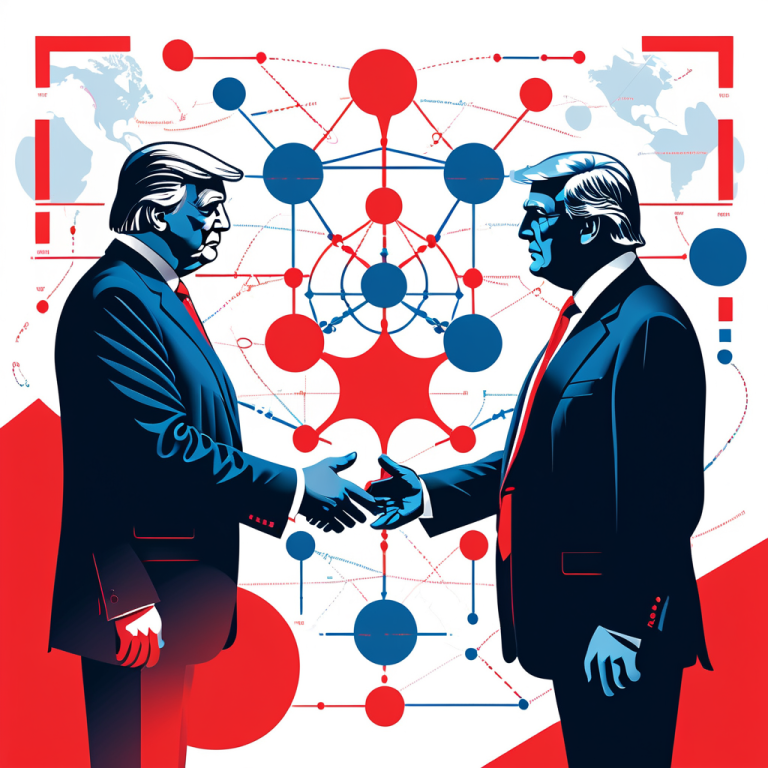
President Donald Trump’s visit to Beijing has underscored the weakening of America’s unique advantages: its alliances, soft power, and institutional superiority. By choosing to proceed with his visit amid ongoing tensions in the Middle East due to conflict with Iran—a situation where China plays a supportive role to Tehran—Trump inadvertently signaled US weakness.

The trip was initially postponed due to escalating hostilities with Iran, which is supported by China. Trump’s decision to honor Chinese President Xi Jinping despite these circumstances has been described as an ‘extraordinary journey’ by former U.S. Vice Secretary of State and Asia Coordinator Kurt Campbell in his Atlantic Council interview. The ongoing conflict involves the US maintaining a naval blockade against Iran, while Trump threatened Tehran with further airstrikes unless a deal is reached.
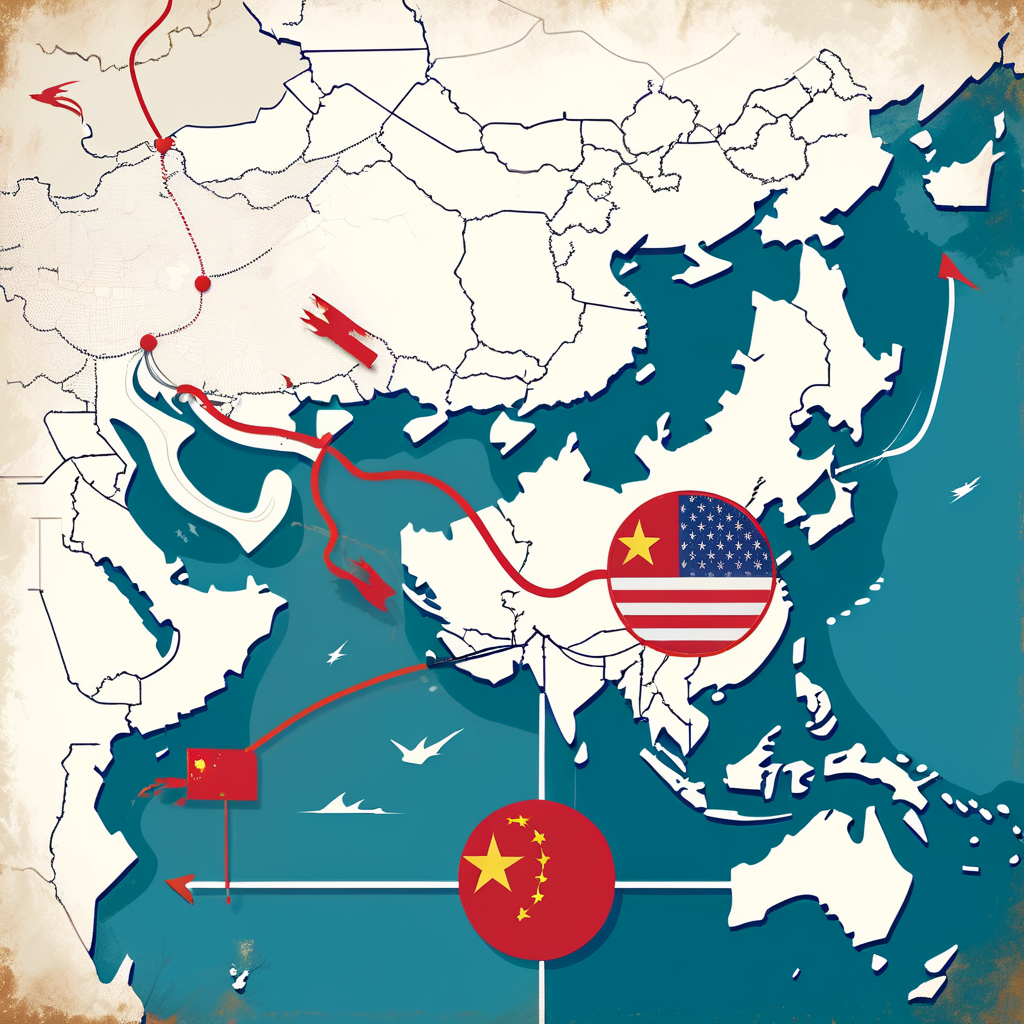
Despite pressure from the blockade, Iran has managed to maintain control over strategic areas like the Strait of Hormuz without offering concessions regarding its nuclear program—partly due to Chinese support. China circumvents Western sanctions by purchasing around 90% of Iran’s oil exports and providing dual-use goods that could benefit Iranian military programs. The recently opened railway link between Iran and China also helps mitigate blockade effects.
Reports suggest that Iran acquired a Chinese spy satellite, enhancing its ability to target U.S. military installations precisely, while Chinese firms allegedly supplied satellite images of American forces. In response, the Trump administration sanctioned Chinese companies providing such data and imposed additional sanctions on Chinese buyers of Iranian oil, although Beijing instructed these refineries to ignore U.S. actions.
Furthermore, intelligence reports indicate that China might have considered supplying Iran with shoulder-fired anti-aircraft missiles or has done so already. Despite this, Trump lavished praise on Xi Jinping during their meeting, calling him an ‘extraordinary leader’ and expressing pride in being his friend. This excessive admiration likely seemed to Xi as another sign of American weakness.
While claiming no need for Chinese assistance in resolving the Iran conflict, Trump’s actions suggest otherwise. China is Tehran’s key economic partner and holds substantial influence over Iran. Recently, China reportedly persuaded Iran against a U.S.-proposed ceasefire, highlighting its leverage.
China benefits from stability in the Persian Gulf, as it imports about one-third of its oil from the region. With sufficient reserves to last seven months, Beijing faces less urgency than Trump, whose party must contend with upcoming congressional elections. China’s strategic interests align with keeping U.S. resources engaged in the Middle East and using its influence over Iran to pressure the U.S. on Taiwan.
During their talks, Xi Jinping issued a thinly veiled warning about the importance of the Taiwan issue for Sino-American relations. The official U.S. summary omitted any mention of Taiwan, raising concerns that Trump might use arms sales as leverage in negotiations with China—a move criticized by Republican senators who affirmed that support for Taiwan is non-negotiable.
Post-meeting, Trump suggested he had discussed the arms deal with Xi ‘in detail’ but remained non-committal. He emphasized both countries’ interest in reopening the Strait of Hormuz and appeared focused on securing business opportunities from China, bringing tech leaders like Elon Musk to Beijing for this purpose. Previously reliant on tariffs to pressure China, Trump’s trade strategy has faltered without international support, weakening U.S. alliances.
Countries like Canada are now independently strengthening ties with China following eased restrictions on Chinese electric vehicles, further fragmenting Western unity and empowering China in bilateral negotiations.
Trump’s actions have led to a decline in America’s soft power, as some European nations view the U.S. as a greater threat than China. His administration bypassed Congress with emergency measures and controversial appointments in key diplomatic roles without Senate approval. The Beijing summit highlights ineffective policies and underscores China’s emergence as a formidable rival rather than an ally, emphasizing the need for Trump to build stronger alliances not in China but among America’s closest partners.
About the Author