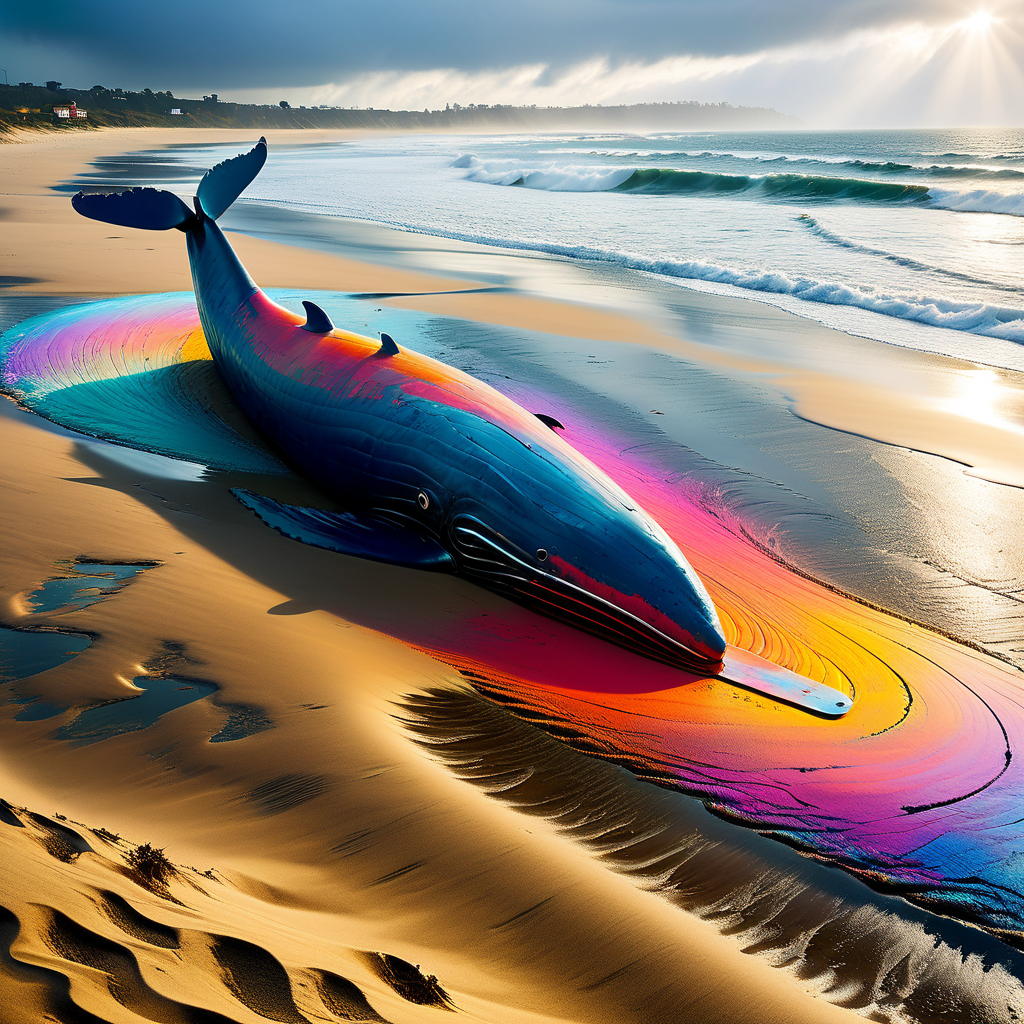
The care for the approximately twelve-meter-long marine mammal is ongoing, with continuous monitoring and regular water spraying by fire brigade personnel. Experts are now also analyzing seawater near Poel Island to gather more information about the stranded whale’s condition. Minister Till Backhaus stated that they aim to measure its salinity levels. “We know that the low-salt water has already caused significant harm to the animal. However, we need reliable data, which we plan to collect today.”
The roughly 1.70-meter-tall and twelve-ton creature is in poor health, suffering from injuries as well, according to Minister Backhaus on Holy Saturday.
Probable causes for its condition include propeller scars and imprints likely from a net. Despite the grim outlook, Backhaus dismissed any plans to euthanize the animal.
Since early March, the whale has stranded four times along Germany’s Baltic coast, managing to swim away thrice before being unable to find the Atlantic route that might have saved it.
Initially spotted in Wismar harbor and later at Timmendorfer Strand in Schleswig-Holstein, it finally beached itself near Wismar on Tuesday. Rescue attempts ceased on Wednesday.
Experts believe the whale will likely die in the bay, but predicting its remaining lifespan is difficult. “In large whales, death can span several days as their body weight increasingly damages organs,” explained marine biologist Tamara Narganes Homfeldt from Whale and Dolphin Conservation (WDC). This leads to a circulatory collapse and organ failure over time.
Recent reports indicate the whale has dug itself about 50 centimeters into the seabed.
“The death of the humpback whale will manifest through complete stillness, especially an absence of breathing for around an hour,” Homfeldt elaborated.
Several days later, decomposition gases will cause the carcass to bloat and emit decay odors.
About the Author